

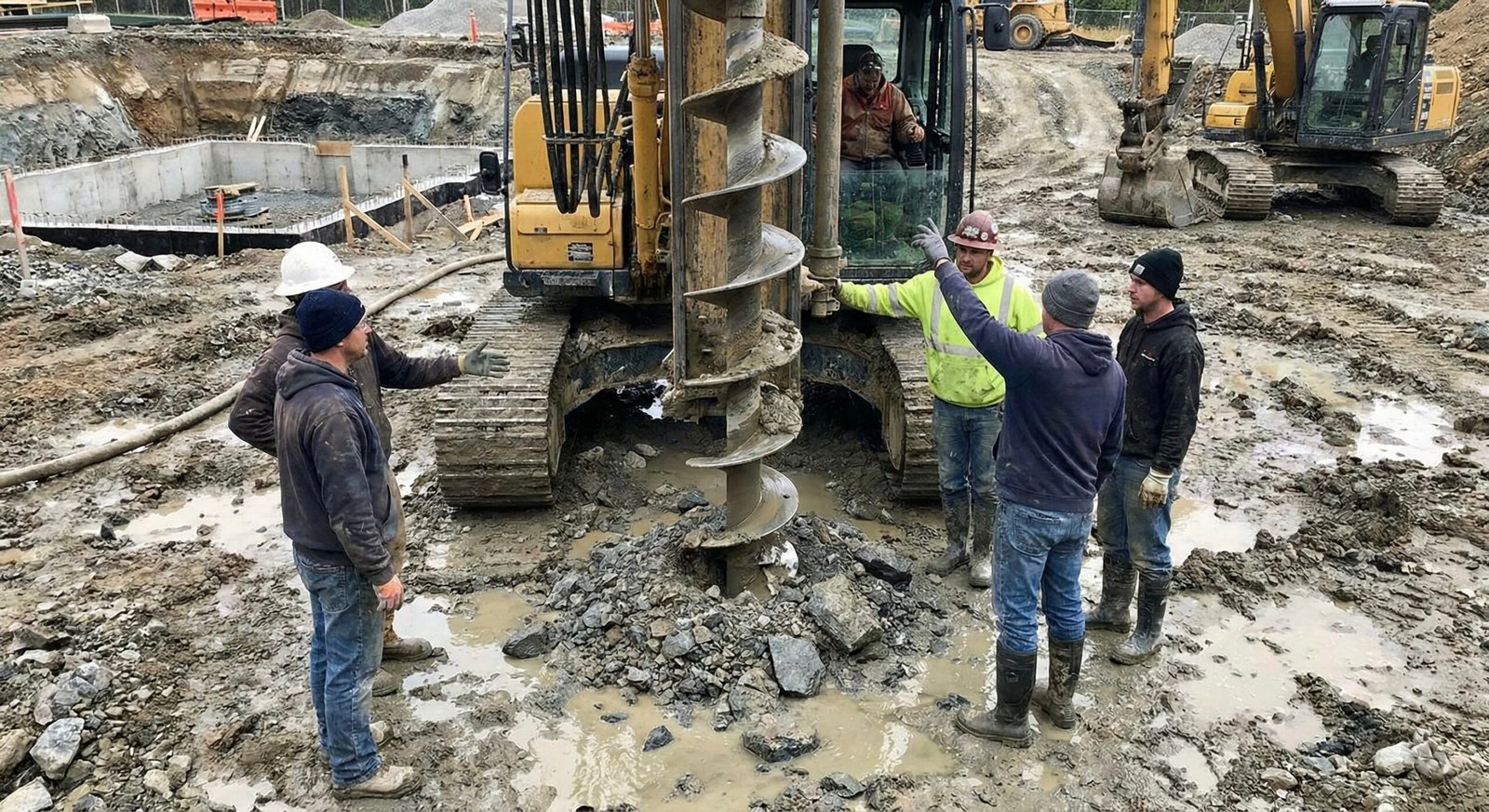
Common Challenges in Pile Foundation Drilling and How to Overcome Them
Pile foundation drilling is a complex process that involves working in varying soil and rock conditions while maintaining strict quality and safety standards. Contractors often face multiple challenges during drilling operations that can impact productivity, cost, and pile integrity if not properly managed.
This article outlines common challenges encountered in pile foundation drilling and practical methods to overcome them.
1. Borehole Collapse and Soil Instability
The Challenge
In loose soil, sand, or water-bearing strata, boreholes can collapse during drilling. This can lead to loss of pile diameter, equipment jamming, and unsafe site conditions.
How to Overcome It
- Use appropriate casing pipes or full-casing systems
- Install casings in stages to support the borehole
- Select drilling buckets suitable for unstable soil conditions
2. Groundwater Ingress
The Challenge
Groundwater entering the borehole can cause soil erosion, reduce bore stability, and affect concrete quality during pouring.
How to Overcome It
- Use temporary or permanent casing systems
- Apply tremie concreting methods for underwater placement
- Ensure proper sealing between casing joints
3. Excessive Tool Wear in Abrasive Ground
The Challenge
Sand, gravel, and rock formations are highly abrasive and can cause rapid wear of drilling teeth, buckets, and core barrels.
How to Overcome It
- Select drilling teeth with high abrasion resistance
- Use carbide-tipped tools designed for specific ground conditions
- Inspect and replace worn components regularly
4. Hard Rock and Obstruction Drilling
The Challenge
Hard rock, boulders, or underground obstructions can significantly slow drilling progress and increase tool stress.
How to Overcome It
- Use core barrels with roller bits or bullet teeth
- Apply pilot bits for controlled penetration
- Ensure drilling rigs provide sufficient torque and pressure
5. Inefficient Spoil Removal
The Challenge
Poor spoil removal can reduce drilling efficiency and lead to repeated passes, increasing project time.
How to Overcome It
- Use drilling buckets with optimized spoil discharge design
- Apply clean-out buckets to remove sediment from bore bottoms
- Ensure proper bucket selection for soil type
6. Concrete Quality Issues During Pouring
The Challenge
Improper concrete placement can lead to voids, segregation, or weak pile sections.
How to Overcome It
- Use tremie pipes and accessories for controlled concrete placement
- Ensure continuous concrete flow during pouring
- Monitor pile integrity after concreting using testing instruments
7. Working in Restricted or Urban Sites
The Challenge
Limited working space and nearby sensitive structures require careful control of vibration and noise.
How to Overcome It
- Use low-noise piling equipment such as oscillators or rotators
- Apply controlled drilling and casing installation methods
- Monitor vibration levels throughout operations
Conclusion
Pile foundation drilling presents a range of technical and operational challenges, but these can be effectively managed through proper planning, correct tool selection, and the use of appropriate drilling techniques.
By understanding potential issues and applying proven solutions, contractors can improve drilling efficiency, maintain pile quality, and ensure safe and successful foundation construction.