

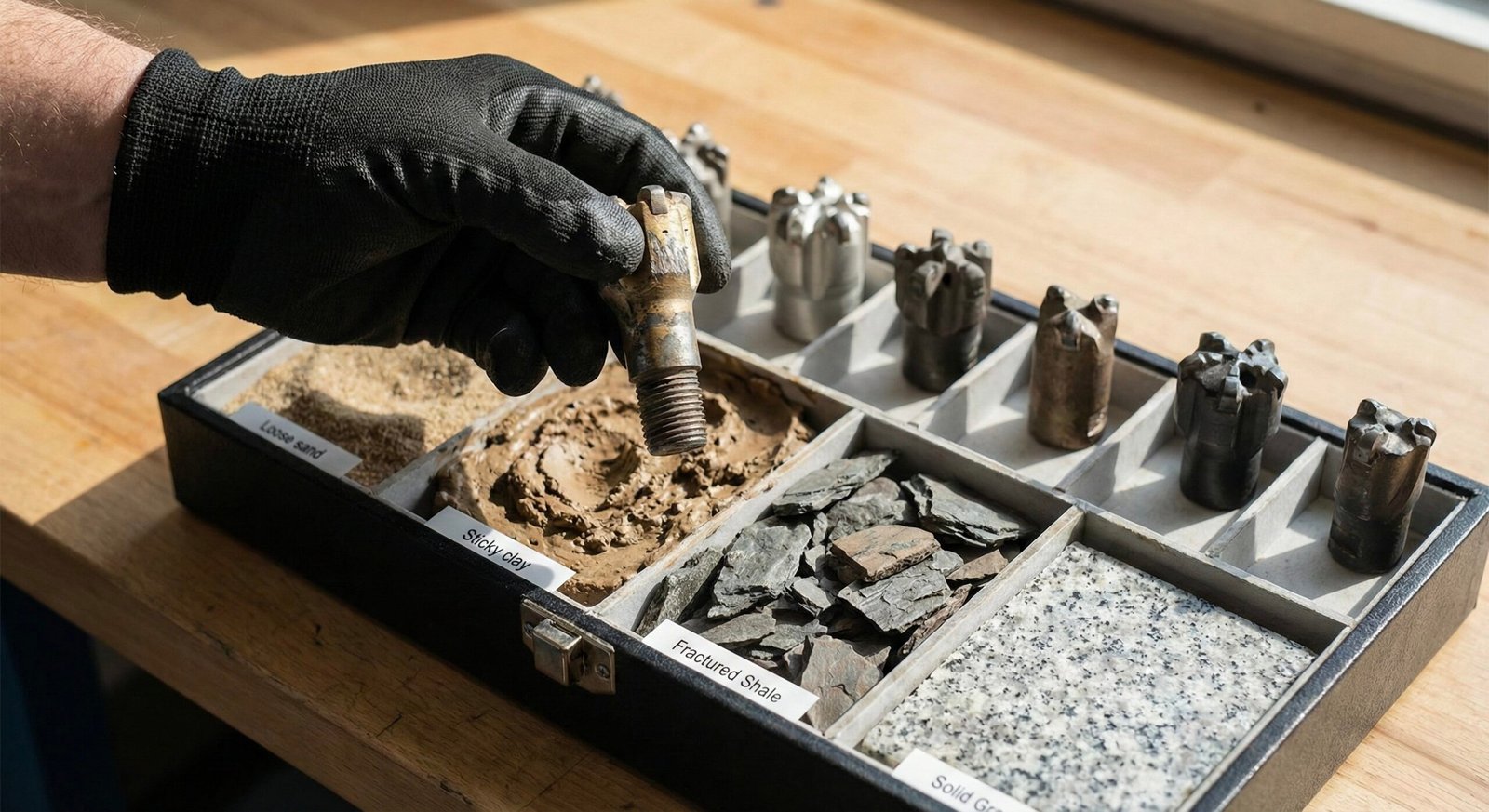
How to Choose the Right Drilling Teeth for Different Ground Conditions
Drilling teeth play a critical role in foundation and piling operations. The correct selection of drilling teeth directly affects drilling efficiency, tool life, and overall project cost. Using unsuitable teeth for specific ground conditions can lead to excessive wear, reduced penetration rates, frequent tool replacement, and unexpected downtime.
This article explains how to choose the right drilling teeth based on different soil and rock conditions commonly encountered in foundation construction projects.
Why Drilling Teeth Selection Matters
Drilling teeth are the primary cutting components that interact with the ground. They are designed to withstand abrasion, impact, and high drilling forces while maintaining effective penetration.
Choosing the right drilling teeth helps to:
- Improve drilling speed and productivity
- Reduce tool wear and replacement frequency
- Maintain stable drilling performance
- Lower operating and maintenance costs
Common Types of Drilling Teeth
Before selecting drilling teeth, it is important to understand the basic types used in piling and foundation drilling:
- Bullet teeth (round shank bits)
- Flat or bucket teeth
- Roller bits
- Pilot bits
- Replaceable carbide blocks
Each type is designed for specific geological conditions.
Selecting Drilling Teeth by Ground Condition
1. Soft Soil, Clay, and Silt
For soft soil, clay, and silt layers, drilling teeth with smooth penetration characteristics are preferred. Teeth with lower resistance and efficient soil discharge help maintain consistent drilling progress.
Recommended features:
- Smooth body design
- Moderate carbide size
- Efficient soil cutting geometry
2. Sand and Gravel
Sand and gravel layers are highly abrasive and require drilling teeth with strong wear resistance. Poor-quality teeth may wear rapidly in these conditions.
Recommended features:
- Larger carbide tips
- High abrasion-resistant materials
- Secure tooth holders to prevent loosening
3. Mixed Ground Conditions
Mixed strata, such as alternating soil, sand, and weak rock layers, require versatile drilling teeth that balance abrasion resistance and impact strength.
Recommended features:
- Multi-step carbide design
- Well-distributed carbide micro-particles
- Strong impact resistance
Bullet teeth with reinforced carbide tips are commonly used in such conditions.
4. Hard Rock and Weathered Rock
Hard rock and weathered rock formations place extreme stress on drilling tools. Selecting unsuitable teeth can result in cracking or premature failure.
Recommended features:
- Large, high-hardness carbide tips
- High-impact strength
- Reinforced steel body
Roller bits and heavy-duty bullet teeth are often used in these conditions to improve penetration efficiency.
5. Boulder and Highly Abrasive Formations
In boulder-heavy or extremely abrasive formations, drilling teeth must withstand both high impact and severe wear.
Recommended features:
- High-quality tungsten carbide
- Optimized carbide geometry
- Secure mounting systems
Regular inspection and timely replacement are essential in such conditions.
Importance of Compatibility with Equipment
Drilling teeth must be compatible with:
- Drilling buckets or core barrels
- Tooth holders and welding blocks
- Rig torque and pressure capacity
Incorrect compatibility can reduce drilling efficiency and increase the risk of tool failure.
Customization and Project-Specific Requirements
Many foundation projects require customized drilling teeth to match unique geological conditions or equipment specifications. Custom carbide sizes, shank dimensions, and wear-resistant designs can significantly improve performance and tool life.
Conclusion
Selecting the right drilling teeth is essential for efficient and reliable foundation drilling. Understanding ground conditions and matching them with suitable drilling teeth helps contractors achieve better productivity, reduce downtime, and control project costs.
By choosing high-quality drilling teeth designed for specific soil and rock conditions, construction teams can ensure consistent performance and long-term operational reliability.