

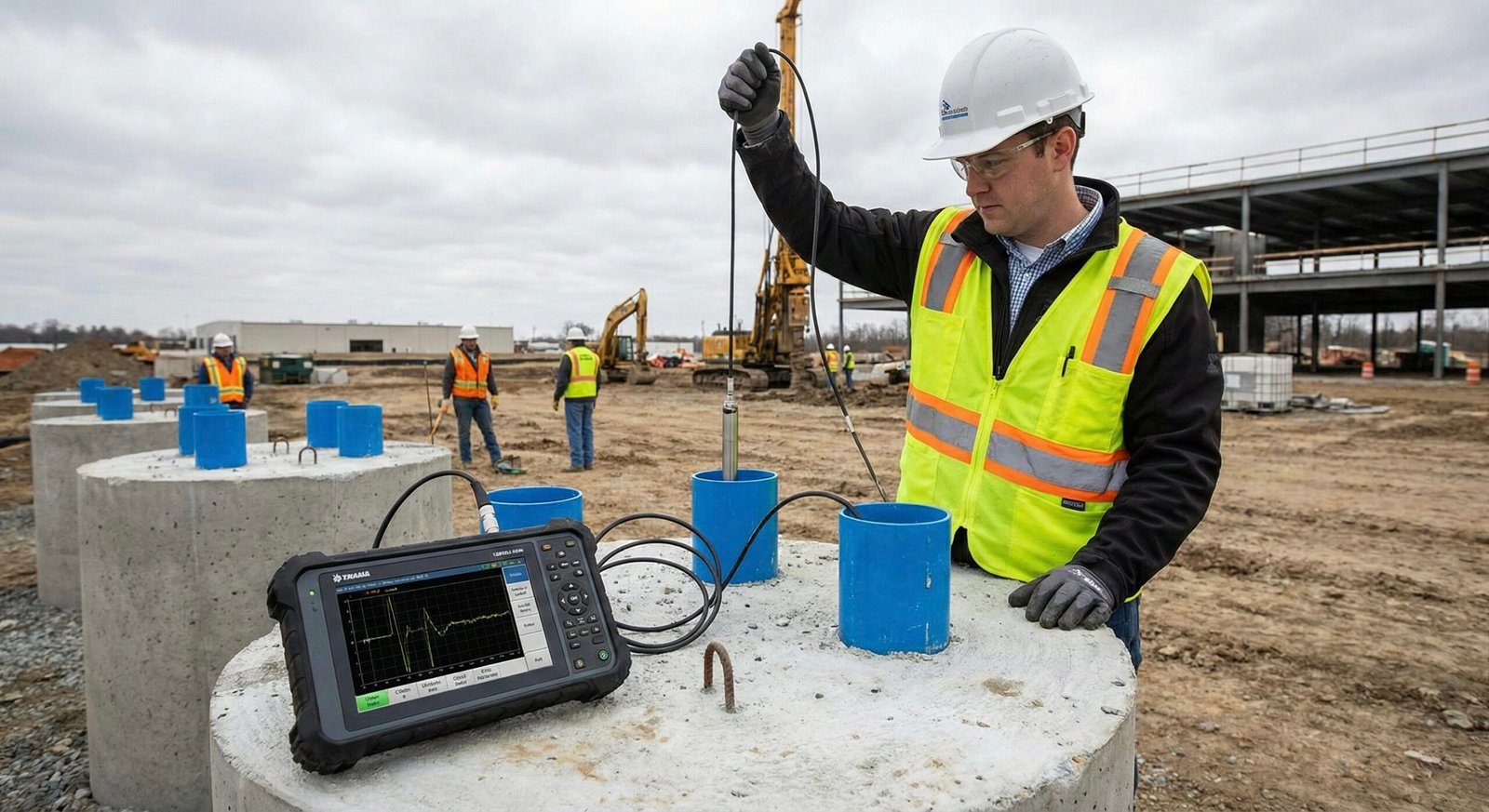
Importance of Sonic Tubes and Pile Integrity Testing in Construction Projects
Ensuring the quality and integrity of pile foundations is critical for the safety and durability of any structure. Even when drilling and concreting are carried out correctly, hidden defects can occur beneath the ground surface. Sonic tubes and pile integrity testing methods play a key role in identifying these issues and verifying pile quality.
This article explains the importance of sonic tubes and pile integrity testing in modern construction projects.
What Are Sonic Tubes?
Sonic tubes are steel or plastic tubes installed inside the reinforcement cage before concrete is poured. Once concreting is completed, these tubes allow testing equipment to assess the quality of the concrete within the pile.
Sonic tubes are mainly used for:
- Integrity testing of bored piles
- Detection of voids or weak concrete zones
- Quality control in deep foundation works
Role of Sonic Tubes in Pile Integrity Testing
Sonic tubes provide access paths for testing probes used in cross-hole sonic logging (CSL). The method measures wave transmission through concrete between tubes, allowing engineers to detect anomalies such as cracks, honeycombing, or inclusions.
Proper installation of sonic tubes is essential to obtain accurate test results.
Common Pile Integrity Testing Methods
1. Cross-Hole Sonic Logging (CSL)
CSL uses ultrasonic waves transmitted between probes placed in sonic tubes. It provides detailed information on concrete quality throughout the pile length.
2. Low-Strain Integrity Testing
Low-strain testing uses reflected wave methods to assess pile continuity and identify major defects near the pile head.
3. High-Strain Dynamic Testing
High-strain testing evaluates pile bearing capacity and structural integrity under dynamic loading conditions.
Benefits of Pile Integrity Testing
Using sonic tubes and integrity testing offers several advantages:
- Early detection of construction defects
- Improved quality assurance
- Reduced risk of structural failure
- Compliance with engineering standards and project specifications
When Is Pile Integrity Testing Required?
Pile integrity testing is commonly required for:
- High-rise buildings
- Bridges and infrastructure projects
- Industrial and offshore structures
- Projects in challenging soil or groundwater conditions
Best Practices for Sonic Tube Installation
To ensure reliable test results:
- Install tubes securely to the reinforcement cage
- Maintain proper spacing between tubes
- Ensure tubes are sealed to prevent concrete ingress
- Fill tubes with clean water before testing
Conclusion
Sonic tubes and pile integrity testing are essential components of quality control in modern foundation construction. They provide valuable insights into the internal condition of piles, helping engineers verify construction quality and prevent costly failures.
By incorporating proper testing methods into foundation projects, construction teams can ensure long-term safety, performance, and reliability of pile foundations.